
karva chauth 2023
Still irritated by it
karva chauth 2023
It’s karva chauth again today. That day of fasting for married women that is greeted with such enthusiasm in the northern part of this country.
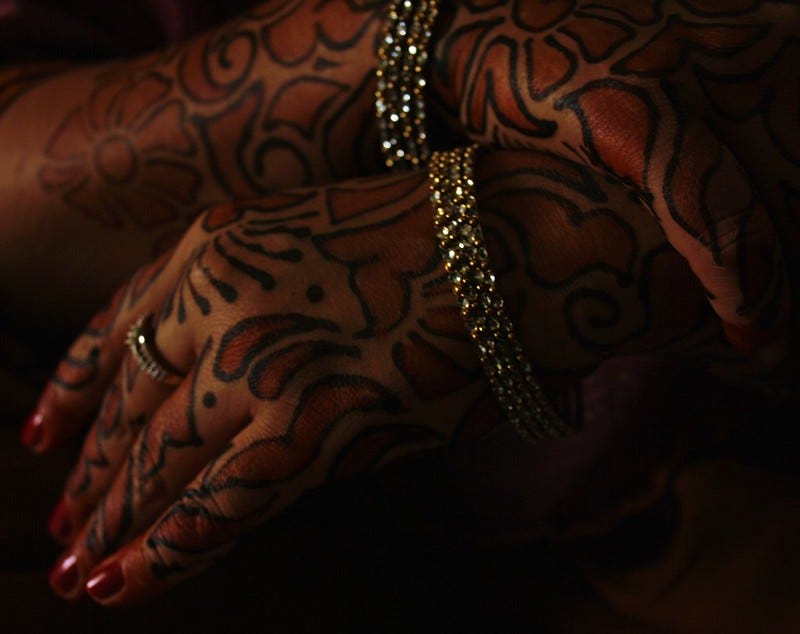
This no food, water (or common sense) deprivation from dawn till moonrise is something I revisit every few years. I cannot seem to get over it. Women I’ve been to school with partake of this feast, er sorry fast, to save their husband’s lives. Women I’ve been to college with who seem sensible in every other way are also indulging in this charade. Today, all over the north, particularly in those highly enlightened states of UP, Punjab, Delhi and Rajasthan women are decked out in garish bridal outfits, their palms darkened with henna, their arms and necks weighted down with jewellery, languishing hungry and martyr-like. They will meet in the park in an hour or so, bearing thalis holding gifts for their mothers-in-law and diyas made of dough. Jangling and jingling they pass around their thalis and repeat mantras. Then they go home to languish some more, shout at their children, rub their aching temples and wish they were amongst the few whose mothers-in law had permitted them a cup of tea in the first year. The sacred first year of marriage. It seems that the mother-in-law and the Yama (the God of Death) decide together whether a new wife may drink tea on the afternoon of Karwa Chauth. Without this permission the men of the family are in imminent danger. They could die.
This continues till the moon rises. It isn’t even a full moon but a lop sided oval that is notoriously recalcitrant on that day. It’s also needed so that the Christmas tree/aka married woman advertising her piety, can stare at it through a sieve and then stare at her husband through the same sieve. I believe she prays to him and then may eat, having done her duty in keeping death at bay for another year. So widespread and deep is this belief in Karwa Chauth’s ability to keep a husband alive that women actually wail angrily, when their husbands do die - ‘but I kept the fast every year’. It is really very sad how educated women with strong political views believe in this magical aspect of the day and also believe that this is a way to show their spouses they love them.
I don’t know why I dislike it so much or why I find it so intensely disturbing. Naysayers will talk about my divorce, my lack of traditional culture and other such reasons hoping to insult me and my lack of belief in the power of the day to prevent deaths. In Bengal, where I grew up, there is no tradition of equating a husband with a god. In Gujarat, where I married, and which is more inclined to raise men on a pedestal, this fasting without food and water while recalling one’s own wedding day, is Not A Thing. There are fasts. In both Bengal and Gujarat. But they’re practical affairs. You leave out the rotis or eat only fruit and you carry on with your day, taking care of your job, your children and yourself instead of being a blot on the landscape in a bright shade of red lightened with sequins and burdened with headaches and nausea.
I thought I would be spared the blatant patriarchy in the years when I taught at school. All these professionals, who had to leave home at 7 am, wouldn't even dream of taking on Yama, dressed in full battle gear. How wrong I was. I boarded the school bus to find wan faces looking at me from under copious lashings of sindoor and lipstick. At school I stared at one particularly enthusiastic woman in floor length tomato red. I’m still trying to push my eyes back into my head.
It is a regressive fast/festival that women are manipulated into participating in out of fear that their husbands will die if they don’t. I suppose it’s hard to fight against that, or even laugh at it. All of us who laugh at the mehendi and dressing up, the sieve, the moon, the husband as god are reviled, told nobody loves us and nobody will. The Christmas trees say they fast by choice, nobody makes them, But, they don’t seem to have examined the premise that a wife’s not eating can keep a husband alive. Or that they may be something iffy about the demand for self sacrifice that karva chauth is about. Anyway, I find it very problematic.
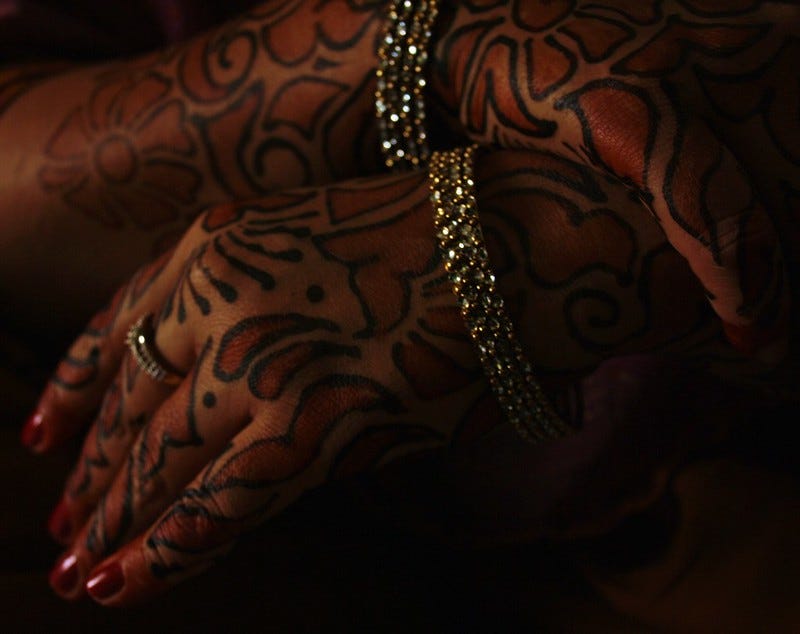
Photo by https://www.flickr.com/photos/bhavnasayana/